Saturday, September 29, 2007

The Emerging Thirteen
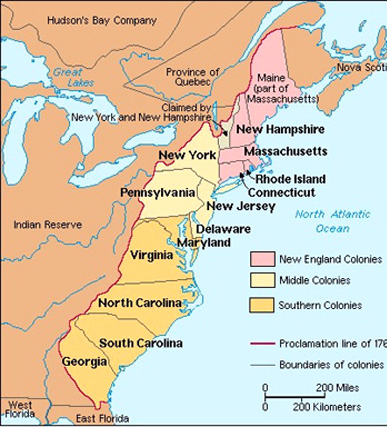


This week we concluded our study of the earliest settlements of Jamestown and Plymouth by reading the Mayflower Compact and a profile of our next door neighbor, Anne Hutchinson. The Compact may be considered our earliest Constitution as it outlined the goals of the community and how all members pledged to work for the common good. You quickly noticed that the Compact also showed that the Pilgrims still supported the King, even though he did not allow them to practice their religion in England. This idea of religious tolerance was not practiced in the Massachusetts Bay Colony, as we learned from the story of Anne Hutchinson being banished for the practice of her religion. She moved to Aquidneck Island and is credited with establishing Portsmouth.

In addition to learning about the story of our country, you are practicing skills that will be useful in your life as a student and out in the work world. While reading about early colonial voting patterns, we discovered that laws became more restrictive over time. Trends and patterns help us better understand history and may even help us make predictions about future behavior. We also used the 3-2-1 reading method, which you can use in all content areas. While reading, try to select 3 big ideas, make at least 2 connections that make the reading more meaningful to you, and ask 1 question about the material. Asking questions leads us to a higher level of understanding.

“An Empire and its Colonies”

For the next 150 years, England enjoyed the benefits of having colonies in the New World. As a supporter of the mercantilism theory of economics, England used the natural resources from the colonies and then shipped back finished goods for the colonists to purchase. The colonies benefited by having a source for their raw products but over time they began to resent the restrictions on what they could produce and on their trading partners. Colonists began to ask if they could make more money if they were free to trade with other countries. England wanted to insure control over the colonies but also realized they were prospering under a policy historians later named “salutary neglect.” This was a policy of minimum interference, including lax enforcement of trade laws and letting the colonies develop their own forms of government. England decided to continue this policy as long as the colonies stayed loyal.

Over time, the thirteen colonies developed into three distinct regions. Ask yourself what factors led to the development of the regions. How did weather and geography influence the way colonists made money? Did the regions attract different types of immigrants? You will need to know the three regions and their characteristics as we continue with our study of Standard I on Colonization and Settlement.

This weekend you are working on your map of the thirteen colonies. This is an opportunity for you to see the physical relationship of the colonies and to reinforce your understanding of geography. Make sure to follow your rubric.

Helpful Hints

Keep in mind that the most important homework you have is the work you assign yourself. Ask yourself what you need to do to understand the story of colonial America. Make sure you understand the vocabulary for the sections you are reading. For a better understanding of the vocabulary check the dictionary or ask a friend. Having a rich and varied vocabulary will help you in many ways, in school and in your future career.

Another useful hint to test your understanding is to talk about the content. Early colonial history can be a great topic of conversation... for example, ask a parent or guardian if they know who established Portsmouth, and why. If you know someone who has traveled the eastern seaboard, ask them about their observations. Did they notice how the climate and geography influenced the development of the different regions?

What does “American” mean?

This week the federal Immigration and Naturalization Service has revamped the citizenship test and sample questions were released to illustrate the new test’s goal of evaluating the ideals important to Americans. Critics of the older test said questions focused on trivia and closed questions, with only one right answer. For example, instead of identifying who said “Give me liberty or give me death,” applicants would be asked the importance of Susan B. Anthony.

As I mentioned on Thursday, sometimes I use the blog to ask extra credit questions so if you know the answers to the above questions, you will have the opportunity to earn extra credit on Monday. Be prepared with your response.

Coming attractions

Next week we will start with current events and then move on to study triangle trade and the impact of slave trading on Rhode Island. We will be going to the computer lab to use a multimedia presentation so please bring earphones/buds so you can hear the presentation.

Saturday, September 22, 2007

Colonies and Charts


This week we finished our chart comparing Jamestown and Plymouth (Plimouth). You should have discovered major differences between the two colonies. Jamestown was established by a group of “gentlemen” who wanted to make a profit through the discovery of gold or by using Native Americans for slave labor. They selected a poor location which led to a great deal of misery and almost resulted in the demise of the colony. The Plymouth colonists came for religious reasons and came as families. Their location provided security and access to hunting fields and clean water. This past week I have been reading Mayflower by Nathaniel Philbrick and he describes in detail how the Pilgrims settled on the actual location of their settlement. His discussion reminds us that geography has a great influence on history. Over time the Plymouth colony faded as new settlers chose to locate in Boston, which had even better access to water routes and higher land to provide additional security.

As we concluded our study of Jamestown, you had the opportunity to generate two types of questions for our quiz. A closed question has only one correct answer while an open ended question may have a variety of responses. For example, “Who is the current President of the United States?” is a closed question with only one correct answer, while “Who has been the most effective President?” is an open ended question that allows for many possible responses. Keep in mind that when you write your response to an open ended question you must included accurate historical information.

Historical Empathy

This week we reenacted the signing of the Mayflower Compact by reading a play on this important moment in history. By putting ourselves back into that time period, we are better able to understand the feelings and intentions of the colonists. On Monday, we will read the actual Mayflower Compact and you will discover that this short document almost acts as a constitution for the early colony.

Portfolio Time

On Friday you set up your portfolio. It is your responsibility to put all of your graded work in the folder and to keep the status of assignment sheet up to date. This is a great way for you to monitor your own work. If your work is below standard you are sometimes given the opportunity to revise. Make sure you do the revisions and turn in the new work at the next class period so you can earn additional credit.

Current Events

On Friday you received the current events assignment and rubric. We practiced in class what you need to do to earn full credit for the assignment. If you have questions, please check the FAQ sheet. The current events assignment is one where you can get your family involved by asking your parents or guardians about the different news stories. It can be a great topic for family conversation or debate. The rubric clearly outlines what you need to do to earn full credit for the assignment. If you want to earn extra credit, follow the directions for “exceeding the standard.” I look forward to seeing your articles on Monday and beginning a lively conversation on topics in the news.

URI China Colloquium

Many items that we purchase on a regular basis, including clothing, food and shoes, are made in China. China has become an economic power house that is changing the world economy. In an effort to better understand this complex and sometimes confusing nation, URI is holding a series of lectures and special events that are open to the public. The programs are held on Tuesday evenings at 7:30 at Chafee Auditorium. For additional information on the event check out the link

The War

On September 23 at 8:00 pm, PBS (Channel 2) will broadcast the first episode of Ken Burn’s “The War.” This is the story of World War II through the eyes of four soldiers from different parts of the country. It tells the story of their experiences as well as how their hometowns changed during this world event. It has gotten exceptional reviews and I would urge all of you to take the time to watch at least part of the program.

Saturday, September 15, 2007

Welcome to US History I


Welcome back to MHS! I know we are going to have a great year.

This is my third year of blogging for US History I. I usually post information on the blog on Saturday morning. The goal of the blog is to provide you with an overview of what we discussed in class and to provide active links for additional information. I will also remind you about major projects and give suggestions on how to be a successful history student.

Let’s review some of our standard classroom procedures. You should bring your 3-ring binder and textbook to class every day. Your textbook should be covered and your name written in the front to insure you return the correct book at the end of the year. You are also responsible for maintaining your portfolio folder in the class bin. We will organize the folders this coming week. All of your graded work goes in the folder and is recorded on the status of assignment sheet. By organizing your work, you will know your grade at any time and will have a great set of study sheets for the mid-term and final.

Let’s quickly review some of the goals we have outlined so far. In US History I, we will be thinking and acting like historians:

Asking questions
Using multiple sources (primary and secondary)
Debating, discussing, reading and writing

In addition we will be working as a community of learners, working with each other to better understand events. You will have daily opportunities for accountable talk. Being accountable means being responsible to yourself, the group and the text. You should be an active member of the group by contributing your thoughts and ideas and asking questions.

We are looking at the events, issues, and personalities of the period 1600-1900 through multiple lenses so that each of us can construct our own narrative. We will also be looking at current events and making links with our past.

Charts

This past week you have been working on a chart that compares the early settlements in Jamestown and Plymouth (Plimoth). Charts are an especially useful tool for historians as they help us organize information and encourage us to compare and contrast. In addition, you have been using multiple sources to help you with the chart: text, video, and primary sources.

You may also want to check out the web site for the Jamestown settlement. Starting with this site you will be able to click on other links that will give you the opportunity to discover more information for your chart. Jamestown has received a great deal of press attention this year as they are celebrating their 400th anniversary. Even Queen Elizabeth II came to honor the legacy of some of our earliest settlers.

Coming Attractions

Next week we will continue working on the chart by reading about Plimoth Plantation in our text, using primary sources and watching a video. We will also set up our portfolio folders so make sure to bring your pocket folder to class. We will also start our study of current events. Each week you will be responsible for bringing in an article about a national or international issue. I think you will find this assignment especially interesting as it gives us the opportunity to see links between our past and today’s events. It also leads to interesting and provocative class discussions. It is also a great way to earn points. When we set up the portfolio system, we will review how you earn points.

Happy Birthday

Monday, September 17 is a special day as we pause to celebrate the Constitution. We celebrated early with our discussion of the Constitution preamble on Friday. This short document has been with us for 220 years. The Constitution clearly outlines our system of government and guarantees our freedoms of speech, religion, press and assembly. So grab a cupcake, put in a candle, and sing a round of Happy Birthday to this great document!