The Emerging Thirteen
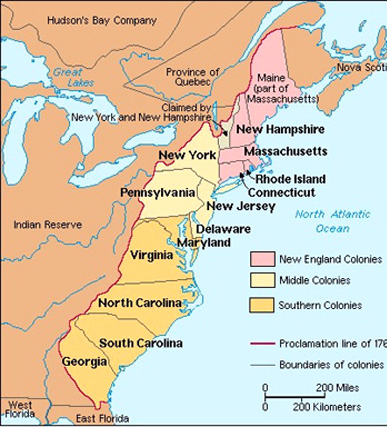
This week we concluded our study of the earliest settlements of Jamestown and Plymouth by reading the Mayflower Compact and a profile of our next door neighbor, Anne Hutchinson. The Compact may be considered our earliest Constitution as it outlined the goals of the community and how all members pledged to work for the common good. You quickly noticed that the Compact also showed that the Pilgrims still supported the King, even though he did not allow them to practice their religion in England. This idea of religious tolerance was not practiced in the Massachusetts Bay Colony, as we learned from the story of Anne Hutchinson being banished for the practice of her religion. She moved to Aquidneck Island and is credited with establishing Portsmouth.
In addition to learning about the story of our country, you are practicing skills that will be useful in your life as a student and out in the work world. While reading about early colonial voting patterns, we discovered that laws became more restrictive over time. Trends and patterns help us better understand history and may even help us make predictions about future behavior. We also used the 3-2-1 reading method, which you can use in all content areas. While reading, try to select 3 big ideas, make at least 2 connections that make the reading more meaningful to you, and ask 1 question about the material. Asking questions leads us to a higher level of understanding.
“An Empire and its Colonies”
For the next 150 years, England enjoyed the benefits of having colonies in the New World. As a supporter of the mercantilism theory of economics, England used the natural resources from the colonies and then shipped back finished goods for the colonists to purchase. The colonies benefited by having a source for their raw products but over time they began to resent the restrictions on what they could produce and on their trading partners. Colonists began to ask if they could make more money if they were free to trade with other countries. England wanted to insure control over the colonies but also realized they were prospering under a policy historians later named “salutary neglect.” This was a policy of minimum interference, including lax enforcement of trade laws and letting the colonies develop their own forms of government. England decided to continue this policy as long as the colonies stayed loyal.
Over time, the thirteen colonies developed into three distinct regions. Ask yourself what factors led to the development of the regions. How did weather and geography influence the way colonists made money? Did the regions attract different types of immigrants? You will need to know the three regions and their characteristics as we continue with our study of Standard I on Colonization and Settlement.
This weekend you are working on your map of the thirteen colonies. This is an opportunity for you to see the physical relationship of the colonies and to reinforce your understanding of geography. Make sure to follow your rubric.
Helpful Hints
Keep in mind that the most important homework you have is the work you assign yourself. Ask yourself what you need to do to understand the story of colonial America. Make sure you understand the vocabulary for the sections you are reading. For a better understanding of the vocabulary check the dictionary or ask a friend. Having a rich and varied vocabulary will help you in many ways, in school and in your future career.
Another useful hint to test your understanding is to talk about the content. Early colonial history can be a great topic of conversation... for example, ask a parent or guardian if they know who established Portsmouth, and why. If you know someone who has traveled the eastern seaboard, ask them about their observations. Did they notice how the climate and geography influenced the development of the different regions?
What does “American” mean?
This week the federal Immigration and Naturalization Service has revamped the citizenship test and sample questions were released to illustrate the new test’s goal of evaluating the ideals important to Americans. Critics of the older test said questions focused on trivia and closed questions, with only one right answer. For example, instead of identifying who said “Give me liberty or give me death,” applicants would be asked the importance of Susan B. Anthony.
As I mentioned on Thursday, sometimes I use the blog to ask extra credit questions so if you know the answers to the above questions, you will have the opportunity to earn extra credit on Monday. Be prepared with your response.
Coming attractions
Next week we will start with current events and then move on to study triangle trade and the impact of slave trading on Rhode Island. We will be going to the computer lab to use a multimedia presentation so please bring earphones/buds so you can hear the presentation.
posted by "1776 and More" at 2:34 PM


0 Comments:
Post a Comment
<< Home